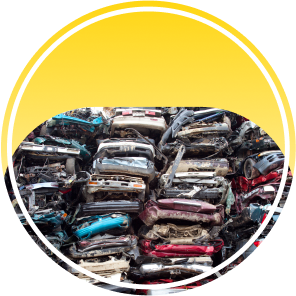
 All conditions accepted
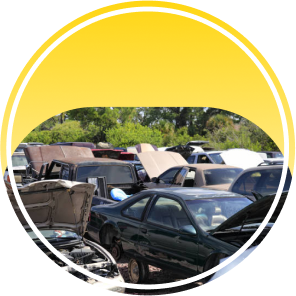 Free flat-bed removal
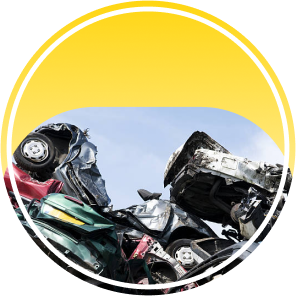 Cash at pickup
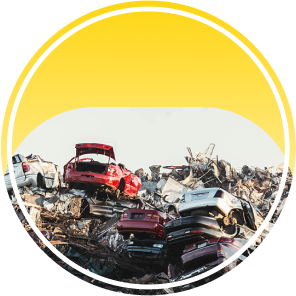 Government registered
 Same-day service
Yes. A car with a blown engine is still worth selling, and in most cases it's still worth real money. The engine is one component in a much bigger pile of steel, aluminium, copper and reusable parts, and a licensed buyer values all of it. If your engine has just let go in Sydney, you're not stuck with a driveway ornament. You have three genuine options to earn cash for unwanted cars in Sydney, and one of them takes about a day from phone call to payment.
What Does a "Blown Engine" Actually Mean?
"Blown engine" isn't one fault. It's a loose term for internal damage bad enough that the engine won't run properly, or won't turn at all. The three failures people usually mean are a failed head gasket, a seized engine, and a spun bearing. They're worth separating, because they cost very different amounts to fix and they affect your car's value differently.
One thing matters before you decide anything: who said "blown". A tow truck driver saying it is a guess. A workshop saying it after a compression test and a coolant check is a diagnosis. Get the second one.
Head Gasket Failure
A head gasket seals the join between the cylinder head and the engine block. When it fails, coolant, oil and combustion gases start crossing into places they shouldn't. You'll usually see white smoke from the exhaust, a coolant level that keeps dropping with no visible leak, oil that looks milky, or a temperature gauge that climbs and won't come back down.
Replacing a head gasket in Australia typically costs between $1,000 and $3,200, depending on the engine and the labour involved. It climbs from there if the cylinder head has warped and needs machining, or if the engine was overheated badly enough to damage the bottom end.
Value-wise, this is the best news of the three. The block and crankshaft are usually intact, so the engine core still has value to a rebuilder.
Seized Engine
A seized engine has locked solid. The pistons can't move in the bores, or the crank can't turn, usually because it ran low on oil or overheated. The tell is blunt: you turn the key, the starter clunks once and nothing happens.
You can't drive it, you can't roll-start it, and no additive will fix it. A seized engine needs a rebuild or a replacement, and a rebuild on a badly scored block often costs more than a good used engine of the same type.
For scrap value, a seized engine is still a large lump of cast iron or aluminium bolted into the front of your car. It doesn't run. It weighs exactly the same.
Spun Bearing or Rod Knock
A spun bearing happens when the bearing shell between the crankshaft and the connecting rod loses its oil film and rotates in its seat. You hear it before it fails completely: a deep, rhythmic knock from low in the engine that speeds up with revs, often with a flickering oil pressure light.
Once a bearing spins, the crankshaft journal is usually damaged. Fixing that means machining or replacing the crank, which is engine-out work. Rod knock that gets ignored often ends as a seized engine, so a knock is a warning, not a life sentence.
On the value side, a knocking engine with a damaged crank is a core rather than a runner. Everything bolted around it is unaffected.
How Much Is a Car With a Blown Engine Worth?
Less than the same car with a working engine, and usually more than owners expect. A blown engine generally pushes an offer toward the lower end of the price range for that vehicle's size, because the engine and catalytic converter are where the easiest parts value sits.
Here are the indicative ranges to sell broken cars in Sydney published in Scrap Cars Syd's October 2026 market guide, across all conditions:
| Vehicle type | Typical kerb weight | Indicative Sydney range |
|---|---|---|
| Small hatchback (e.g. Toyota Yaris) | ~1,000 to 1,200 kg | $150 to $400 |
| Sedan (e.g. Toyota Corolla) | ~1,300 to 1,400 kg | $300 to $600 |
| Mid-size SUV (e.g. Toyota RAV4) | ~1,600 to 1,800 kg | $500 to $900 |
| Full-size ute (e.g. Ford Ranger) | ~2,000 kg and up | $700 to $1,500 |
| Stripped shell (any size) | Variable | $150 to $350 |
Indicative only. Ranges reflect current Sydney market conditions across all conditions, not blown-engine cars specifically. Actual offers depend on weight, make, model, completeness and live metal prices. Contact Scrap Cars Syd on 1300 356 697 for an accurate figure.
Expect to sit in the lower part of your vehicle's band. A 2010 Corolla with a seized engine is not a $600 car. A tidy RAV4 with a failed head gasket, a full interior and its catalytic converter still fitted will land closer to the top of its range.
Four things move the number:
- Weight. Scrapyards buy metal by the kilogram. A heavier car is worth more, even in the same condition.
- The catalytic converter. If it's still there, it can add a few hundred dollars on its own. If it was cut out, expect a visible drop.
- Make and model. Toyota, Ford and Holden parts move quickly through wreckers, so intact components on those cars attract stronger offers.
- Completeness. Every part you've already removed is a deduction. Selling the car whole always returns more than selling a shell.
For context, industry data cited in that same guide puts the average scrap car price across Australia at around $521 in 2026, which sits in the middle of those bands.
Your Three Options (and the Real Cost of Each)
You can replace the engine, sell the car off in pieces, or sell it whole to a buyer who deals in non-running vehicles. Each one costs you something, and the cheapest option on paper is rarely the cheapest in practice.
Option 1: Replace the Engine
Sometimes this is the right call. If the car is under about eight years old, low in kilometres and worth $15,000 or more, a replacement engine can be sensible. You keep a car whose history you know, and you avoid the cost of replacing it.
Published 2026 Australian pricing puts a full engine replacement at roughly $3,300 to $11,900 fitted. A new crate petrol engine with labour tends to land around $5,600 to $6,700. A diesel replacement is closer to $9,300 to $10,200, because the engine costs more and the job takes around 14 hours of labour.
What the initial quote often misses: a used engine of unknown history, a new clutch while the gearbox is already out, coolant, hoses, and the chance that the replacement is nearly as tired as the original. You're also without the car for roughly two to seven days.
The rule of thumb most mechanics use is simple. If the repair costs more than half the car's market value, don't do it. On a $4,000 car facing an $8,000 engine, the maths ends the conversation. On a $20,000 car facing $6,000, it doesn't.
One piece of admin people forget: when the engine number changes, that has to be updated on the vehicle's record with Transport for NSW.
Option 2: Sell It for Parts
Parting a car out can return more than scrap if the panels, interior, lights and gearbox are genuinely in demand. It's also a job. You need off-street space, tools, somewhere dry to store parts, and weeks of answering messages for $80 here and $150 there.
Then there's what's left. Once you've sold what people wanted, the shell is still sitting in your yard, and a stripped shell is worth roughly $150 to $350 as scrap metal. You've done all the work and you still have to arrange removal.
This route makes sense for enthusiast cars, rare models, or a vehicle where the panels and trim are sought after. For a 15-year-old Corolla, it usually doesn't.
Option 3: Sell It Whole to a Scrap Car Buyer
This is the shortest path. You describe the car and the fault, you get an offer, and a truck collects it. No listing, no inspections, no strangers in your driveway, no advertising costs, and no charge for the tow. If you're chasing cash for unwanted cars in Sydney, this is the route that gets it done in a day.
Be honest about the damage. A buyer told the engine is seized will quote on that basis. A buyer who discovers it on arrival may renegotiate, and that's a worse experience for both of you. Describe the fault accurately on the phone and the number you agree to is the number you get paid.
One thing worth saying plainly: a blown-engine car fetches less than a private sale of the same car running. What it saves you is the repair bill, the towing, the weeks of listing, and the risk that the buyer never turns up.
Why a Blown Engine Doesn't Make a Car Worthless
Because the engine is one component, and scrap value is calculated on the whole vehicle. A typical passenger car weighs around 1,440 kg, roughly 75 per cent of which is recoverable material. None of that disappears because the engine stopped.
Here's what's still in the car:
- Steel. About 830 kg in a typical passenger car, or 65 to 70 per cent of its weight. This is the base of the offer and a seized engine doesn't change it.
- The engine block itself. A four-cylinder block and head is a substantial lump of cast iron or aluminium. It's a core rather than a runner, but it still gets weighed.
- Aluminium. Around 160 kg across the cylinder head, intake, wheels and panels on many models. Clean aluminium is worth far more per tonne than steel.
- Copper. Roughly 25 kg in the wiring harness, alternator, starter and electrical components.
- Catalytic converter. It contains platinum, palladium and rhodium, and on many cars it's the single most valuable part above the steel price.
- Gearbox, differential, suspension, ECU, glass and interior. All sellable to a wrecker when they're intact and in demand.
You also don't need a roadworthy certificate, a repair, or a single phone call from a tyre-kicker. That has a value of its own.
How to Sell a Car With a Blown Engine in Sydney
Get the fault confirmed, gather your paperwork, and call two or three licensed buyers for a quote. The whole process usually takes one phone call and one collection.
- Get the diagnosis in writing. A workshop note saying "head gasket failure, coolant in cylinders" is worth more than "the engine's blown". It also stops anyone renegotiating on arrival.
- Gather your documents. Photo ID, proof of ownership (registration papers, purchase receipt or dealer invoice), and bank details for the transfer. If there's finance owing, get a payout letter first.
- Clear the car out. Remove personal belongings, toll tags, parking permits and anything you want to keep.
- Get two or three quotes. Give every buyer the same information: make, model, year, kilometres, the fault, and anything else that's damaged. You can only compare properly when everyone is quoting the same car.
- Book the collection. Confirm the time window, and mention steep driveways, low car parks, gates or tight garages.
- Get paid, then lodge your Notice of Disposal. Payment is made by bank transfer at collection. If the car is still registered, lodge a Notice of Disposal with Transport for NSW within 14 days so it comes out of your name.
If you're weighing up options for selling broken cars in Sydney, ask every buyer the same question: is the quoted price the price I'm paid on the day? It's the only number that actually matters.
How Does Collection Work If the Car Won't Start?
A car that won't start, or won't roll, is collected on a flat-bed truck with a winch. The driver handles the loading. You don't move the car and you don't pay for the tow.
The right truck turns up
Scrap Cars Syd sends a flat-bed truck with a winch, anywhere in Sydney. The tray lowers to ground level, so the car never has to drive itself on.
The winch does the loading
The cable is hooked to a tow point or axle and the vehicle is pulled up and strapped down. A blown engine is easier to load than a blown brake line, because the wheels still turn and the car slides straight on.
Tell us about access before we arrive
An underground car park with low clearance, a steep narrow driveway or a locked gate changes the job. Say so when you book, and the driver brings the right truck and the right amount of patience. A job that should take 20 minutes doesn't turn into an hour.
Free tow, payment at collection
Once the car is loaded and the paperwork is signed, payment goes through by bank transfer. The tow is free and part of the deal, never deducted from your offer.
Conclusion
If your engine has just failed, the honest answer is that your car is worth less than it was last week, but it isn't worthless. A car with a blown engine still has its steel, its gearbox, its catalytic converter and everything else intact, and that's what a buyer is actually paying for. Whether you repair it, part it out or sell it whole comes down to the car's value and how much time you want to spend.
Scrap Cars Syd has been buying non-running and damaged vehicles across all Sydney suburbs for over 40 years. Call 1300 356 697 or request a free quote and tell us the make, model, year and what the mechanic said. You'll get a genuine offer, free collection and payment at pickup.
Editorial note: Repair costs quoted are indicative Australian market pricing as of and vary by vehicle, engine and location. Scrap vehicle ranges reflect Scrap Cars Syd's October 2026 Sydney market guide and current metal prices. Actual offers vary by make, model, weight, condition and completeness. Contact Scrap Cars Syd directly for an accurate quote on your specific vehicle.