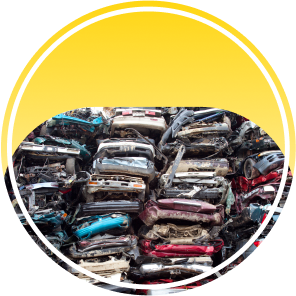
 All conditions accepted
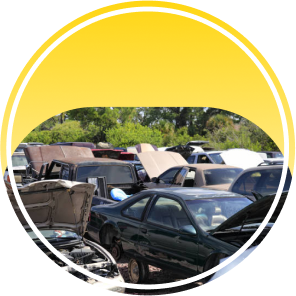 Free flat-bed removal
 Paid at pickup
 Government registered
 Free paperwork help
Search for free car removal in Sydney and you'll find a separate page for almost every postcode, from Five Dock and Blacktown through to Cronulla, Dee Why and Camden. That makes it look like the map sets the price, when the only thing actually being valued is the vehicle sitting outside your house. It doesn't.
What your suburb decides is logistics: how fast a truck reaches you, whether it can get to the car where it sits, and how long the driver needs to load it. What your car decides is the offer. Those two things get mixed up constantly, so this guide separates them. You'll also get the honest version of which areas move fastest, plus what to tell the operator about clearance, parking and access so the collection goes right the first time rather than turning into a second appointment.
Short Answer: No, But Your Suburb Changes Three Things
Your postcode doesn't change what your car is worth. It changes how quickly a truck reaches you, how easily the driver can load the car where it sits, and how much you need to organise before pickup for a car removal in Sydney.
What Stays the Same in Every Sydney Suburb
The parts that decide your money and your paperwork don't care where you live. They work the same from Palm Beach to Campbelltown.
- The valuation. The car is priced on make, model, year, condition and what can be recovered from it, not on the street where it happens to be parked.
- The removal cost. Scrap Cars Syd publishes free towing anywhere in Greater Sydney, with no travel charge added and nothing deducted from the offer.
- The payment method. A licensed NSW motor vehicle recycler can't pay in notes under the Motor Dealers and Repairers Act 2013 and the Regulation that started on 1 September 2025. Money arrives by bank transfer at pickup.
- The ID. Photo ID and proof of ownership, in every suburb, every time. What ID you need to sell a car for cash covers the awkward cases.
- The notice of disposal. Same form, same 14-day window, same rules about number plates.
- The buyer's licence. A licensed recycler keeps a register of every vehicle bought. That obligation follows the buyer, not your address.
What Changes: Pickup Windows, Access and Towing
Pickup windows. Trucks work in runs rather than one job at a time, so a suburb where several collections are already booked gets a tighter window than one out at the edge of the metropolitan area. Traffic sets the rest, and Military Road, Victoria Road, Parramatta Road and King Georges Road all do the same thing to a schedule at eight in the morning.
Access. This is the real variable. A driveway in Blacktown and a basement in Parramatta are different jobs, and the postcode doesn't describe either one. Clearance under a basement entry, turning space at the end of a cul-de-sac, parking restrictions on a clearway and building permission in a strata block all live here, and none of them appear in a postcode.
Towing. A car that rolls and steers drives onto a tilt tray in a few minutes, while a car with four flat tyres, no keys or a locked electric park brake has to be winched, which takes longer and needs clear space behind the truck.
Why People Assume Suburb Sets the Scrap Car Price
Because hundreds of cash for cars pages are named after individual suburbs, and a page carrying your suburb's name looks rather like a local price list. It's a landing page written to catch your search, not a rate card.
The second reason is delivery-fee thinking: couriers charge more the further they drive, so it feels logical that a scrap vehicle buyer would apply the same logic to a collection. Scrap value doesn't work that way. Metal is priced by weight and grade, parts are priced by demand, and both of those figures are determined at the yard once the vehicle is dismantled, regardless of whether it arrived from Marrickville or Marsden Park.
The third reason is that a postcode genuinely does change one thing people notice, which is how soon the truck turns up. That delay gets read as a pricing signal when it's really nothing more than a scheduling one.
Worth knowing: a postcode can delay your pickup. It can't shrink your offer. If a quoted figure drops the moment you give your address, ask what changed, because the vehicle details should already have covered it.
Which Suburbs Get the Fastest Free Car Removal in Sydney?
Speed follows run density rather than distance: suburbs where trucks already work every day get the tightest windows, and the outer edges of the metropolitan area get a scheduled slot instead.
Distance from the yard matters far less than most people expect, because a truck already three streets away costs nothing extra to divert. A truck crossing the city for a single vehicle carries the same fuel and labour cost whether it collects one car or three, and that difference shows up in the schedule rather than in your offer.
Inner West, Five Dock and the Eastern Suburbs
Scrap Cars Syd publishes the Inner West as serviced daily with same-day availability, covering Concord, Strathfield, Burwood, Newtown and Five Dock, and that density works in your favour because a truck is rarely far away.
The trade-off is street space. Inner West streets are often terrace-lined with cars parked both sides, leaving one lane. The driver will stop, load and move rather than block the road for longer than needed, so a rear-lane pickup is sometimes easier than the street out front.
In the Eastern Suburbs, resident parking schemes in Waverley and Randwick mean the truck holds no permit, so mid-morning pickups after the school run and before afternoon parking fills up tend to be the smoothest. Beachside streets in Bondi, Coogee and Maroubra get considerably tighter through summer.
Parramatta, Blacktown and Western Sydney
Western Sydney is listed by Scrap Cars Syd as one of its busiest regions, which usually means more trucks in the area and tighter windows to choose from.
The housing stock helps: Blacktown, Seven Hills, Pendle Hill, Marsden Park and Fairfield have a high share of separate houses with driveways and side access, so the truck can often get completely off the road. That's the easiest loading there is.
Parramatta CBD is the exception, because high-rise apartment blocks, basement parking and clearways along Victoria Road and Parramatta Road mean the car usually has to be brought to street level before the truck can reach it. Book outside peak clearway hours and the job gets considerably simpler.
Liverpool, Sutherland Shire and the South
Coverage runs from Yagoona through Macquarie Fields and Leumeah and down through the Sutherland Shire. It's a wide band, so the pickup window depends on where in it you happen to sit.
Around Liverpool and Campbelltown you'll find newer estates and cul-de-sacs, and turning circle rather than clearance is the constraint there, so a car parked nose-in at the end of a court takes longer to load than one sitting in a driveway.
In the Shire, steep blocks around Como and Oyster Bay change the job: if the driveway is steep or the car sits below street level, the driver will winch from the road rather than risk the truck on the slope. King Georges Road and the Princes Highway carry the traffic through the day, so an early slot beats a 4pm one.
Northern Beaches and the Hills District
The Northern Beaches is covered with no additional travel charge, including Dee Why, Manly, Frenchs Forest and Brookvale, which removes the main worry people have about peninsula pickups.
Timing is the catch, since Military Road and the Spit make a 9am Manly booking a very different job to a 9am Blacktown booking. Steep driveways and low carports are common too, so measure the clearance before you book if the car sits under any kind of structure.
The Hills District and Macarthur, including Castle Hill, Baulkham Hills and Narellan, often have long driveways and acreage, which makes loading easy. The limit is ground surface: a tilt tray won't leave a sealed road to cross a wet lawn, so a car parked on grass gets winched from the driveway instead.
Tight Access Suburbs: Units, Laneways and Underground Parking
A tilt tray is a light rigid truck built around a sliding deck, and its overall height sits well above the clearance a residential car park was designed for. That geometry, rather than the suburb, is why the car usually comes to the street instead of the truck going in.
Almost every basement entry has a clearance figure printed above it. Read it before you book and pass the number on. A passenger car fits under most of them. A truck with a tray that has to lift does not, and guessing wrong wastes a trip for you and the driver.
If the car sits on common property, get the building manager's approval first, because strata schemes control vehicle access to shared basements and driveways. A two-line email the day before saves an argument on the day.
Rear lanes are often the easiest access in the Inner West, because there's no parking to fight over and no clearway to watch. Width and overhead lines are the things to check, along with whether the lane is public road or building property.
When the Car Cannot Be Towed From Where It Sits
There's almost always a way, but it changes the job, and the driver has four options to work through depending on what's physically in the way.
- Roll it out. If the car steers and rolls, two people can usually get it to street level.
- Winch from the road. The truck stays on the street and pulls the car up a driveway or ramp.
- Skates or a dolly. Used when the wheels won't turn or the car has to come out of a tight bay.
- A smaller truck. Sometimes the only option in a narrow lane, and it has to be booked, not improvised.
Tell the operator what's blocking access when you book, whether that's a pillar, a kerb, a locked gate, a steep ramp or another car parked too close. No keys is worth mentioning too, because the steering lock stays engaged and that changes what equipment the driver brings along.
Does Distance From the Yard Affect What You Pay Me?
No. In metropolitan Sydney, distance is the operator's cost rather than a deduction from your offer, and Scrap Cars Syd's published policy is free towing anywhere in Greater Sydney with no additional travel charge.
That isn't generosity, it's how the business model works. A scrap car is worth what its parts and metal are worth, and that figure is set before the truck leaves the yard. Towing is the cost of acquiring stock, in the same way a retailer absorbs the freight on inventory rather than charging it back to each customer individually.
Suburb vs. Vehicle: What Actually Drives Your Offer
These are the things that move the number, in rough order of influence.
- Make and model. A common model means parts that sell quickly. A rare one means parts that sit on a shelf.
- Year and condition. Damage, rust and accident history all reduce recoverable value.
- Weight. More steel and aluminium per car means more recovered material, which is why a large SUV usually beats a small hatch.
- Completeness. Catalytic converter, alloy wheels, battery, engine and gearbox all carry value. A car stripped of those is worth less, in any suburb.
- Whether it runs and steers. Not a deal breaker, but it changes the loading, and some buyers reflect that.
- Metal prices on the day. Steel, aluminium and copper move, and offers move with them.
- Money owing. If the car is under finance, the payout letter is part of the sale, not part of the price.
Your postcode isn't on that list, and it never has been. What moves the number is the car itself: how common the model is, how much metal and how many sellable parts it still carries, and what those materials are fetching on the day you call. Tell the operator the year, the condition and an honest description of the damage, and the figure you're quoted is one the yard can stand behind.
What to Have Ready Before the Truck Arrives in Any Suburb
The same list applies whether you're in a Bondi apartment or on acreage at Blaxland. Get it sorted the night before and the collection itself takes minutes, because the driver arrives already knowing what the job involves.
- Photo ID in the name of the registered operator, or written authority from them if it's not you.
- Proof of ownership: the certificate of registration if you have it, or a receipt and bill of sale if the car is unregistered.
- Keys, including the spare and any remote.
- Personal items out: toll tag, parking permit, garage remote, child seats, tools, sunglasses, the lot.
- A decision on the plates. Leave them on and you lodge a notice of disposal. Take them off and you return them to a service centre and cancel the registration instead.
- Clear access: bins moved, gate unlocked, second car shifted, neighbour told if the truck needs their side of the street.
- The finance payout letter if money is owed on the car.
- A heads-up on anything awkward: no keys, flat tyres, locked park brake, basement level, tight lane.
A photo of where the car sits is the most useful thing you can send. One shot of the driveway, lane or basement entry tells the operator which truck to allocate and whether the driver needs skates, so the collection takes minutes rather than turning into a second visit.
How to Check Your Suburb Is Covered
Look up the coverage list, then confirm the details on a call. It takes under a minute, and it removes the only genuine uncertainty in an otherwise straightforward transaction.
Scrap Cars Syd publishes coverage across Western Sydney, Inner Sydney, Northern Sydney, Southern Sydney, the Eastern Suburbs, the Hills District and Macarthur. If your suburb isn't named, it's still worth asking, because the list covers regions rather than every street.
- Find your suburb or region on the coverage list.
- Describe the address type: house, unit block, basement, acreage. The address type matters more than the suburb name.
- Ask two questions: is there a travel charge, and what pickup window can you hold?
- Raise the access issue at booking, not when the truck is already outside.
Confirm coverage against the exact address rather than the postcode alone, because a single suburb can straddle two council areas with two different sets of parking and access conditions. If your region is on the list but the property is unusual, say so at booking and let the operator match the truck and crew to the job.
Free Car Removal in Sydney Is a Vehicle Question, Not a Postcode Question
Your suburb changes the schedule and the loading, but it doesn't change what the car is worth, and it certainly doesn't change the price of the removal, which is free across Greater Sydney. Give the operator your address type, your access details and the honest condition of the car, and the quote you get is the quote you'll be paid.
If the car is sitting there and you're ready to move it, Scrap Cars Syd handles the rest: government registered, over 40 years buying across Sydney, free flat-bed removal, and payment by bank transfer at pickup. Call 1300 356 697 or request a free quote and tell them where it's parked.
Sources and scope: coverage areas, free towing policy and payment method reflect Scrap Cars Syd's published service information. Notice of disposal and registration requirements reflect Service NSW and Transport for NSW guidance current as at . The cashless payment rule for licensed motor vehicle recyclers commenced 1 September 2025 under the Motor Dealers and Repairers Act 2013 and the Motor Dealers and Repairers Regulation 2025, as summarised by NSW Fair Trading. Access details vary by property, so confirm with the operator when booking.