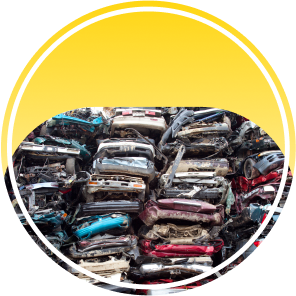
 All conditions accepted
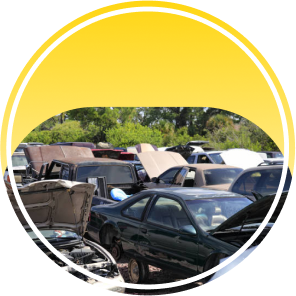 Free flat-bed removal
 Paid at pickup
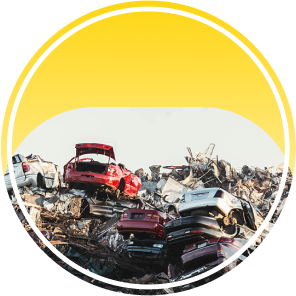 Government registered
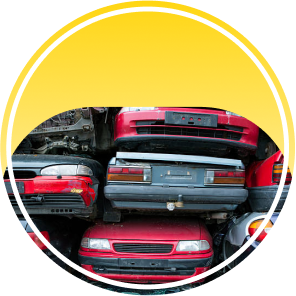 Free paperwork help
Ask what scrap metal prices per kg in Sydney are today and the honest answer is a range, not a single figure. Clean copper sits near the top at about $13.95 to $15.50 a kilo, heavy steel near the bottom at $0.20 to $0.27, and the gap between those two ends is roughly seventy to one.
Most guides make you do the maths. They quote per tonne, from a yard in Melbourne or Perth, and leave you to divide by a thousand. This one gives you the per kg number first, then explains what actually moves it. Then it does the part a scrap yard can't do for you: it puts a dollar figure on the metal inside a whole car when you take it to a car recycling in Sydney, which is where most Sydney sellers are actually standing.
What Scrap Metal Is Worth Per Kg in Sydney Right Now
Clean copper wire is worth about $13.95 to $15.50 per kg in Sydney today, clean aluminium $1.80 to $3.00, and heavy steel roughly $0.20 to $0.27. Every other metal sits somewhere between those three.
The split that matters is ferrous against non-ferrous. Ferrous metals contain iron: steel, cast iron, REO, old whitegoods. They're heavy, there's a lot of them around, and they pay the least per kilo. Non-ferrous metals contain little or no iron, and copper, brass, aluminium, stainless and lead each track their own world market.
A $2 fridge magnet sorts the two families in about a second. If it sticks hard, you're holding ferrous metal and you're getting paid by the tonne. If it doesn't stick, you're in the smaller, better-paid half of the market.
Current Scrap Metal Prices Per Kg in Sydney
These are the indicative ranges Sydney yards were publishing in late November 2026, laid out per kg so you can compare without a calculator. Treat them as a benchmark rather than a quote, because the rate you're actually paid is set the day your metal hits the scale.
Non-ferrous metals, per kg
| Metal | Grade | Per kg (AUD) |
|---|---|---|
| Copper | Bright, stripped wire | $13.95 to $15.50 |
| Copper | No.1 pipe, clean, no solder or fittings | $13.54 to $15.00 |
| Copper | No.2 pipe, painted or welded | $12.88 to $14.00 |
| Copper | No.3, brass fittings or chrome plating | $12.10 to $13.00 |
| Copper cable | Priced on how much copper it contains | $2.00 to $9.00 |
| Brass | Clean taps, fittings and gunmetal | $5.00 to $9.50 |
| Aluminium | Clean extrusion, sheet and alloy rims | $1.80 to $3.00 |
| Aluminium | Cast and mixed automotive | $1.00 to $2.50 |
| Stainless steel | 304 and 316 | $1.17 to $3.00 |
| Lead | Sheet and pipe, steel free | $1.72 to $2.00 |
| Electric motors | No attachments or circuit boards | $1.00 to $1.30 |
Ferrous metals, quoted per tonne
| Steel grade | Per tonne | Per kg |
|---|---|---|
| Heavy, over 5mm thick | $200 to $270 | $0.20 to $0.27 |
| Clean light, under 5mm thick | $150 to $200 | $0.15 to $0.20 |
| REO bar | $170 to $350 | $0.17 to $0.35 |
| Whitegoods | $100 to $150 | $0.10 to $0.15 |
Copper Scrap Price Per Kg
Clean copper is the highest-paying common scrap in Sydney, and the grade you present decides where in the range you land. Bright stripped wire pays the top rate, pipe with paint, solder or a brass fitting drops a grade or two, and insulated cable is priced on how much copper is actually inside it.
The spread is bigger than it looks. A 20kg bundle of bright wire at $15.50 is $310. The same 20kg as low-grade insulated cable at $2.00 is $40. Same weight, same metal family, nearly eight times the money.
Stripping is the best-paid hour you can spend on scrap. It's also why a yard or a car scrapper in Sydney asks what the cable is before it asks how much of it you've got.
Steel and Iron Scrap Price Per Kg
Steel pays the least per kilo because there's so much of it and it's expensive to move. Heavy steel over 5mm thick fetches about $0.20 to $0.27 per kg, and clean light steel under 5mm sits at $0.15 to $0.20.
Yards quote it by the tonne for a reason. A small hatchback carries roughly 700 to 800 kg of steel and iron once the fluids, tyres and trim come off, and at $0.24 a kilo that's about $170 to $190. It's real money, but it's rarely the number people have in their head when they hear the word scrap.
Contamination is what kills a steel price, not the market. A load with glass, plastic, rubber or wet carpet mixed through it gets downgraded or knocked back, because somebody has to pay to sort it before it goes anywhere.
Aluminium Scrap Price Per Kg
Clean aluminium extrusions, sheet and alloy rims pay $1.80 to $3.00 per kg, while cast and mixed automotive aluminium pays $1.00 to $2.50. It's the middle of the market: worth five to ten times steel, and a fraction of copper.
Aluminium is where a car gives up its easiest win. Alloy wheels, cylinder heads, radiators and, on plenty of modern cars, the bonnet and boot skin are all aluminium. Keep them out of the steel pile and they get graded, and paid, on their own.
Aluminium cans attract a lower rate again. Don't tip a bag of cans into a load of clean extrusion and expect the extrusion rate on the lot.
Stainless Steel, Brass and Lead
Stainless steel pays $1.17 to $3.00 per kg depending on whether it's 304 or 316, brass fittings pay $5.00 to $9.50, and lead pays $1.72 to $2.00.
Stainless is where the grade number matters most. 316 carries more nickel and molybdenum than 304, and the two sell into different markets, so a yard will test rather than take your word for it. Kitchens, benches, sinks, balustrade and commercial cookware are the usual sources.
Brass is copper and zinc, and clean brass with no steel or rubber attached gets the top of the range. Taps, valves, fittings and gunmetal all qualify.
Lead comes from sheet, pipe and old flashing. It's dense, so a small volume adds up quickly on the scale, but at under $2 a kilo it's never going to be the reason a load is worth collecting on its own.
How Scrap Metal Is Priced Per Kg
Every quote is a rate per kilo multiplied by a net weight, and both halves have room to move. The rate comes from the yard's buy price that day, and the net weight is what a certified weighbridge reads after the tare is taken off.
Three things decide the number, in this order:
- The metal and its grade. Copper isn't steel, and bright wire isn't cable. Grade is the one part you control.
- The weight on a certified scale. You're paid on net weight, which is the loaded weight minus the empty vehicle.
- The market that day. Non-ferrous rates are back-calculated from benchmarks in US dollars, so they can move between Monday and Friday.
Per Kg vs Per Tonne
Non-ferrous metal is quoted per kg in Australia and ferrous metal is quoted per tonne, which is why the two sets of numbers look so far apart. Divide a tonne rate by 1,000 and they sit on the same scale.
A 400kg load of heavy steel at $240 a tonne is $96. The same 400kg at $0.24 a kilo is also $96, because it's the same calculation wearing a different hat.
Where people get caught is mixing the units. A yard quotes $250 a tonne, you mentally compare it against a $2.00 a kilo aluminium quote, and steel suddenly looks like the better bet. It isn't. $250 a tonne is $0.25 a kilo.
Why Every Yard Quotes a Different Rate
Because each yard grades to its own standard and back-calculates its buy price from what its mill or exporter will pay, less freight, handling, a contamination allowance and margin. Two honest yards can quote differently on the same metal on the same morning and both be right.
Published Sydney guides as at late November 2026 put clean copper anywhere from $8.00 to $15.50 a kilo. That gap isn't one yard being dishonest. It reflects different grade definitions, how recently each list was updated, and what each buyer is selling into.
So ask two questions before you commit: what grade are you paying this at, and when was that rate last updated. A yard that answers both clearly is worth the drive.
What a Scrapped Car Is Worth in Metal, Not Parts
A scrapped car's metal value starts with kerb weight, and roughly 60 to 65 per cent of that weight is steel and iron. Published NSW scrap value bands put a small hatchback at $150 to $400, a sedan at $250 to $600, an SUV or 4WD at $400 to $900 and a ute at $500 to $1,500.
Here's a small hatchback worked through. Kerb weight 1,200kg. At 60 to 65 per cent steel, that's 720 to 780kg of steel and iron. At $0.20 to $0.27 a kilo, the shell and running gear come to about $144 to $211 before anything else is counted.
Add the bolt-on metals and you land inside that published $150 to $400 band. That's the metal floor, and it's the number a per-kilo yard would be working from. Operators for car scrappers in Sydney pay for the vehicle as a whole instead, which is why their offers usually sit above a pure weight calculation.
Body Shell, Engine and Wheels
The body shell is the steel, and it's the cheapest part of the car per kilo. The engine and gearbox are worth more as used parts than as iron, and alloy wheels are graded as clean aluminium rather than going in with the body.
That's the whole reason a complete car beats a stripped one. If you pull the wheels, the battery and the converter before the buyer arrives, you haven't added value. You've moved it, and usually lost some of it in the process.
Steel wheels are the exception. They go in with the light steel at $0.15 to $0.20 a kilo, and tyres carry no metal value at all. A car sitting on four perished tyres is the same weight of metal as one on new ones.
Catalytic Converters, Batteries and Radiators
A catalytic converter is the most valuable bolt-on part on most cars, worth roughly $50 to $800 depending on the code stamped on it, because it holds platinum, palladium and rhodium. Batteries run $5 to $15 each, and radiators are graded on whether they're aluminium or copper and brass.
Converters are priced by code rather than by size, because the precious metal loading changes with engine size, fuel type and emissions standard. That's also why NSW rules are tight around them, and why a recycler can't buy a vehicle whose VIN has been removed, defaced or altered.
Lead-acid batteries are priced by the unit at most Sydney yards, or by weight at $0.30 to $0.80 a kilo if yours weighs them. Radiators in most modern cars are aluminium and go in at $1.00 to $2.50 a kilo, while older copper and brass radiators are graded separately and pay considerably more.
The wiring loom is a small weight of copper at $3.50 to $10.00 a kilo. It's worth pulling if you're already stripping a car for parts, and not worth pulling if a buyer is quoting you on the whole thing.
What Moves Scrap Metal Prices in Sydney
Four things move a Sydney scrap rate: the world metal price, the Australian dollar, freight and fuel, and how much of that metal is already sitting in local yards. None of them care which suburb you're in.
The LME sets the benchmark. Copper traded at US$13,955 a tonne on the London Metal Exchange cash basis on 6 November 2026, and every copper quote in Sydney follows that number within days rather than months.
The exchange rate does the rest. Metals are priced in US dollars, so a weaker Australian dollar lifts the local rate even when the metal itself hasn't moved at all. That's why two identical loads a fortnight apart can pay differently.
Freight and fuel are the quiet ones. Moving metal costs money, and a yard has to recover it before it pays you anything, which is why a buyer close to a port or a mill can afford to pay more than one that trucks everything 400km.
Local supply is the last piece. When a lot of one metal comes through Sydney yards in a short window, its rate softens regardless of what the world price is doing. The reverse is also true, and it's why demolition season and a quiet January can pay differently for the same copper.
How to Get the Best Price for Your Scrap Metal or Car
Sort by metal, keep it clean, and get the grade right before you weigh, because that's where most of the money is won or lost. For a whole car, the strongest offer usually comes from a buyer who prices the parts as well as the metal.
- Separate the metals before you load. A mixed load gets paid at the lowest value in the mix.
- Strip the copper wire. Bright wire pays $13.95 to $15.50 a kilo. Insulated cable pays $2.00 to $9.00.
- Remove the non-metal. Rubber, plastic, glass and wet carpet all cost you weight and grade.
- Weigh it yourself first. A rough figure lets you sanity-check the ticket instead of accepting it on faith.
- Ring two or three yards the same day and ask for the rate per grade, not a price for the whole load.
- Bring photo ID. NSW scrap dealers must record your details, and no licensed dealer can pay you cash.
- For a car, get a whole-vehicle quote too. A per-kilo quote ignores the converter, the alloys, the engine and the gearbox.
That last point is the one most sellers miss. A scrap yard prices metal. A whole-vehicle buyer prices a car, which is the metal plus every part that still works. On a vehicle with a clean converter and four alloy wheels, the gap between those two quotes is often those two items on their own.
Worth knowing: don't strip the car before it's collected. Pulling the converter or the wheels doesn't add money to your offer, it removes value from the vehicle and can reduce the quote you're given.
Where to Recycle Scrap Metal in Sydney
Sydney has three routes for scrap metal: a dedicated scrap metal yard, a transfer station or council facility, and a licensed motor vehicle recycler if what you're clearing is a whole car. Which one you use depends on whether you're selling metal by weight or a vehicle as an object.
Scrap yards buy by weight and pay on the scale. They're built for loose metal: copper pipe, cable, aluminium offcuts, stainless benches, lead flashing, steel beams. For a renovation clean-out, that's the right call, and the yards with a published price list are the easy ones to compare.
Council facilities and transfer stations take metal as part of general waste handling. They're convenient, but they aren't competing for your copper, so the rate reflects that.
A licensed motor vehicle recycler is the right route for a car, because a car isn't really a metal load. It's a bundle of parts with metal attached. Motor vehicle recyclers in NSW must hold a licence under the Motor Dealers and Repairers Act 2013, and since 1 September 2025 they can't buy a vehicle, part or accessory with cash, a cheque payable to cash, or goods and services in kind.
Most of the market for car recycling in Sydney works the same way: a licensed buyer collects the vehicle, removes the fluids, recovers the parts that still have a market, and recycles the rest. That's why the paperwork matters as much as the price, and why a buyer who handles the notice of disposal for you is worth more than a $20 difference in the offer.
Two rules apply wherever you take it. Photo ID is mandatory in NSW under the Scrap Metal Industry Act 2016, and no legitimate dealer can pay cash for scrap metal. If someone offers you notes in a car park, that's not a shortcut, it's a problem.
Conclusion
Scrap metal prices per kg in Sydney come down to three numbers: what the metal is, what grade you present it in, and what the market did that morning. Copper at $13.95 to $15.50 a kilo and steel at $0.20 to $0.27 are the two ends of the same scale, and everything else sits between them.
If what you're clearing is a car rather than a pile of offcuts, price it as a car. A complete vehicle carries a converter, alloy wheels, a battery and an engine that a per-kilo yard won't pay you for. Call Scrap Cars Syd on 1300 356 697 or request a free quote with the make, model, year and condition, and they'll tell you what the whole thing is worth.
Sources and scope: per kg and per tonne ranges reflect price guides published by Sydney scrap metal yards and current London Metal Exchange benchmarks, checked on . Scrap car value bands reflect NSW scrap valuations published in September 2026. LME cash copper price as reported for 6 November 2026. Scrap Cars Syd's service details (free removal with no travel or towing deduction, bank transfer at pickup, photo ID and proof of ownership, Sydney coverage) reflect its published service information. Dealer registration, photo ID and non-cash payment rules for scrap metal reflect the Scrap Metal Industry Act 2016 (NSW). The cashless rule for motor vehicle recyclers commenced 1 September 2025 under the Motor Dealers and Repairers Act 2013 and the Motor Dealers and Repairers Regulation 2025, as summarised by NSW Fair Trading. Notice of disposal and registration cancellation reflect Service NSW guidance current at 24 November 2026. Metal rates move daily, so confirm the rate before you load.